

Who Controls the Strait of Malacca?
Sovereignty, Naval Power & the Global Stakes
Three nations share its shores. One superpower patrols its waters. Another is desperate to reduce its vulnerability to it. And international law draws a careful line between all of them. Here is the complete, authoritative answer.
No single country “controls” the Strait of Malacca in an absolute sense. Under the United Nations Convention on the Law of the Sea (UNCLOS), the strait falls under the joint jurisdiction of its three littoral states — Malaysia, Singapore, and Indonesia — who share responsibility for navigation safety, environmental protection, and security. However, day-to-day naval dominance of the broader Indo-Pacific region — and thus the strait’s strategic environment — is exercised primarily by the United States Navy. China, India, and Japan each maintain significant interests and growing presence, making the strait one of the most contested geopolitical spaces on Earth.
The Legal Framework: What UNCLOS Says
The starting point for any serious answer to who controls the Strait of Malacca is international maritime law — specifically the United Nations Convention on the Law of the Sea (UNCLOS), which came into force in 1994 and remains the foundational legal architecture governing all of the world’s seas and straits.
Under UNCLOS, the Strait of Malacca is classified as a “strait used for international navigation” — a legal category that carries specific rights and obligations very different from a nation’s ordinary territorial waters. The key principle is transit passage: all ships and aircraft, including naval vessels and military aircraft, enjoy an uninterruptible right of transit through such straits. The littoral states cannot suspend, halt, or impose conditions that effectively prevent this passage.
What the Littoral States Can and Cannot Do
⚖️ UNCLOS: Littoral State Powers in the Strait
- ✅CAN: Establish sea lanes and traffic separation schemes to regulate navigation safety
- ✅CAN: Enforce environmental regulations on vessels transiting the strait
- ✅CAN: Levy fees for services provided (pilotage, navigational aids, hydrographic surveys)
- ✅CAN: Conduct anti-piracy patrols and board suspicious vessels under domestic law
- ❌CANNOT: Suspend or interrupt transit passage for any reason, including military exercises
- ❌CANNOT: Require prior notification or permission from foreign naval vessels
- ❌CANNOT: Impose customs inspections or immigration controls on transiting vessels
- ❌CANNOT: Levy transit tolls merely for passage rights (only for specific services rendered)
This legal architecture means the three bordering states exercise regulatory sovereignty — genuine and important — but not the kind of absolute control that would allow them to weaponise the strait against other nations. That distinction is the source of enormous geopolitical tension, because it means that even China, despite its growing naval power, cannot legally prevent the U.S. Navy from transiting the strait — and vice versa.
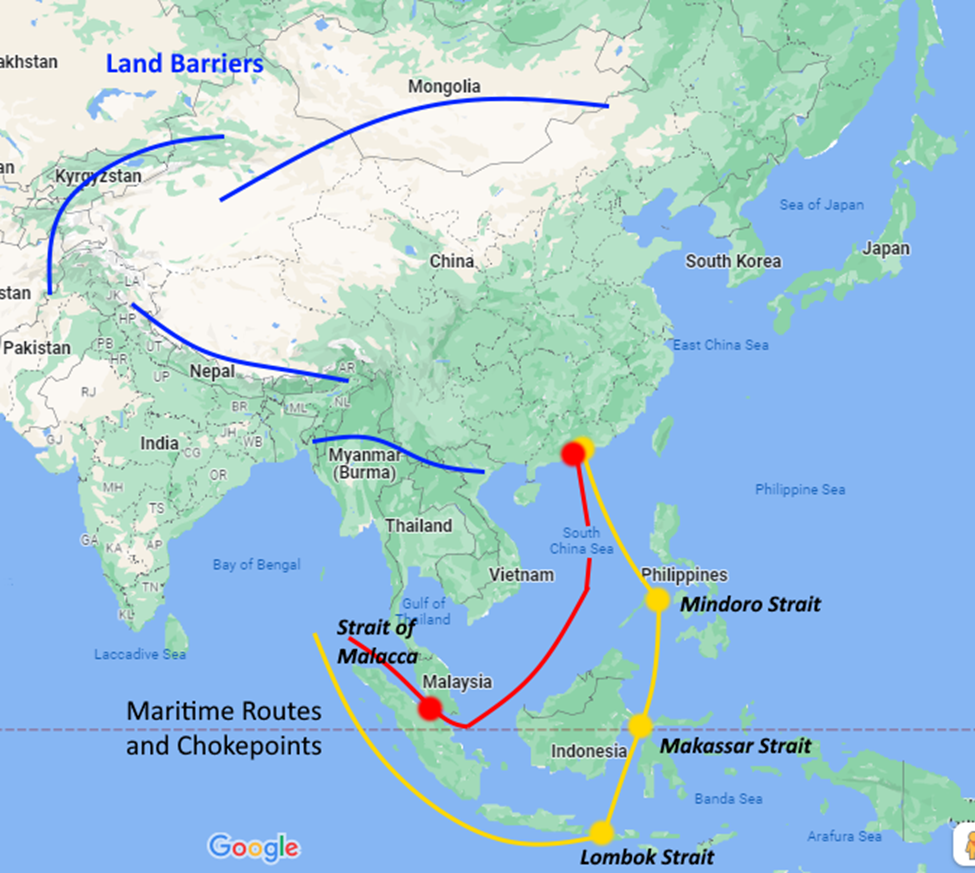
Figure 1: The Strait of Malacca and its bordering states — Malaysia to the north, Indonesia (Sumatra) to the south, and Singapore at the southeastern entrance. (Source: StraitMalacca.com)
The Three Littoral States: Malaysia, Singapore & Indonesia
Formal sovereignty over the waters of the Strait of Malacca is divided among three countries whose coastlines define the passage. Each has distinct interests, capacities, and strategic orientations — and their cooperation, or lack of it, shapes day-to-day governance of the world’s most important waterway.
The three states established a Traffic Separation Scheme (TSS) in 1981, which IMO formally adopted, dividing the strait’s shipping lanes into northbound and southbound channels to reduce collision risk. This was a landmark exercise in collaborative governance — and remains the model for how the strait is managed day to day.
Malaysia’s Role and Interests
Malaysia exercises sovereignty over the northern shore of the strait from the Thai border in the northwest to the Johor Strait in the southeast, encompassing the coast of Peninsular Malaysia. Its key strategic assets include Port Klang — the 12th-busiest container port in the world — as well as the port of Penang, the Lumut naval base, and extensive coastguard infrastructure.
Kuala Lumpur has consistently adopted a posture of cautious multilateralism on strait governance: cooperating with Singapore and Indonesia on security, welcoming international contributions to anti-piracy efforts, but historically resisting any formal foreign military presence within the strait itself. Malaysia was notably reluctant to accept U.S. and Japanese requests in the early 2000s to station international naval forces in strait waters, preferring regional ownership of security.
Malaysia’s economic interests in the strait are massive. The country earns significant revenue from port services, bunkering, and the transit trade, and Malaysian businesses are deeply integrated into the regional supply chains that flow through the corridor. Any disruption to the strait is simultaneously a national security and economic emergency for Kuala Lumpur.
Singapore: The Gatekeeper at the Eastern Entrance
Singapore’s relationship with the Strait of Malacca is unlike any other nation’s. The city-state does not merely border the strait — its entire existence as a prosperous, sovereign entity is premised on the strait. Founded by the British precisely for its commanding position at the southeastern narrows, Singapore has been the principal gatekeeper of the strait’s most congested section for over two centuries.
Today, Singapore controls the Phillips Channel — the critical passage where the strait narrows to less than 3 kilometres — and operates the Port of Singapore, one of the world’s two busiest ports by container throughput. The Maritime and Port Authority of Singapore (MPA) co-manages the strait’s traffic separation scheme and provides navigational services across the eastern approaches.
Singapore’s defence posture reflects its vulnerability. Despite having a population of only 6 million and a land area of roughly 728 square kilometres, Singapore fields one of the most capable and well-equipped militaries in Southeast Asia. Its Republic of Singapore Navy operates advanced frigates, submarines, and coastal patrol vessels, all oriented around the defence of the strait approaches. Singapore also hosts a rotational U.S. Navy logistics facility at Changi Naval Base — a strategic arrangement that gives Washington a forward presence at the most critical point of the strait.
“Singapore is not merely a city at the mouth of the strait — it is, in functional terms, the strait’s operating system. Remove Singapore, and the Malacca corridor becomes ungovernable.”
Indonesia’s Sovereignty and Strategic Weight
Indonesia controls the entire southern shore of the strait — the coast of Sumatra — as well as the waters immediately adjacent under UNCLOS territorial sea provisions. As the world’s largest archipelagic state and the fourth most populous country on Earth, Indonesia brings enormous latent strategic weight to the strait, even if its naval enforcement capacity has historically lagged behind Malaysia and Singapore.
Jakarta’s interests in the strait are complex. On one hand, Indonesia benefits from the economic activity the strait generates — Batam and Bintan islands opposite Singapore have developed as industrial zones partly capitalising on strait proximity. On the other, Indonesia is deeply protective of its sovereignty and has periodically expressed concern about the extent of foreign naval activity in waters it considers its own.
Indonesia also controls the most viable alternative sea routes to the Malacca Strait — specifically the Lombok Strait and the Sunda Strait — giving Jakarta an additional lever of strategic influence over shipping that needs to bypass Malacca. These straits, while longer, are critical backup corridors and their governance is entirely under Indonesian jurisdiction.
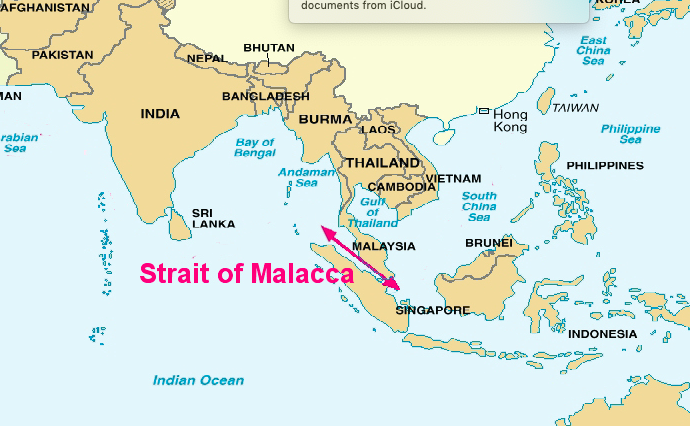
Figure 2: Maritime patrol areas and traffic management zones in the Strait of Malacca (2026). The layered governance structure reflects the shared jurisdiction of Malaysia, Singapore, and Indonesia. (Source: StraitMalacca.com)
The United States: De Facto Naval Overlord
Whatever UNCLOS says about the formal rights of the littoral states, the practical reality of power in the Strait of Malacca — and the broader Indo-Pacific — is shaped above all by the United States Navy, the world’s most powerful maritime force and the architect of the post-1945 liberal international order that guarantees freedom of navigation across the world’s oceans.
The U.S. Seventh Fleet, headquartered in Yokosuka, Japan, maintains operational responsibility for the Western Pacific and the approaches to the Strait of Malacca. It is the largest forward-deployed naval fleet in the world, comprising at any given time approximately 50–70 ships, 150 aircraft, and 27,000 personnel. Strike groups built around aircraft carriers can project overwhelming force anywhere in the Indo-Pacific within days.
U.S. Strategic Assets Near the Strait
🇺🇸 U.S. Military Footprint in the Malacca Region
- ⚓Changi Naval Base, Singapore: Rotational logistics and berthing facility for U.S. Navy surface combatants
- ✈️Sembawang, Singapore: U.S. Logistics Group Western Pacific — fleet support operations
- 🛩️Royal Malaysian Air Force Butterworth: Occasional U.S. air assets and Five Power Defence Arrangements exercises
- 🛳️Diego Garcia, Indian Ocean: Major U.S. naval and air base providing strategic depth and bomber access to the entire region
- 🌏7th Fleet carrier strike groups: Rotational presence with freedom of navigation operations (FONOPs) throughout the Indo-Pacific
- 🤝Alliance network: Defence treaties with Japan, South Korea, Australia, the Philippines, and Thailand underpin the broader security architecture
The United States does not claim sovereignty over the strait and officially supports the rights of the littoral states under UNCLOS. What Washington does claim — and vigorously defends through naval presence and diplomatic pressure — is the principle of freedom of navigation for all vessels, including its own warships. In practice, this means the U.S. is the external power most capable of both protecting and threatening the strait’s openness, depending on the geopolitical circumstances.
China’s Ambitions and the Malacca Dilemma
No nation’s relationship with the Strait of Malacca is more fraught with strategic anxiety than China’s. Beijing imports approximately 80% of its oil through the strait — a dependency that former President Hu Jintao famously described as the “Malacca Dilemma” in 2003. The core fear is simple: in the event of a conflict with the United States, Washington (or a U.S.-aligned power) could potentially blockade or disrupt the strait, severing China’s energy supply and crippling its economy and military capacity simultaneously.
China’s response to this vulnerability has been multi-pronged and vast in scale. The Belt and Road Initiative (BRI) is partly an attempt to build alternative supply routes — pipelines, roads, and rail links — that bypass the strait altogether. The China-Pakistan Economic Corridor (CPEC) and the Myanmar oil pipeline to Yunnan are both designed partly with Malacca bypass logic in mind. Read the full analysis of the Malacca Dilemma.
Simultaneously, China has dramatically expanded its naval capacity. The People’s Liberation Army Navy (PLAN) has grown from a coastal defence force into a genuine blue-water navy capable of power projection across the Indo-Pacific. China now operates multiple aircraft carriers, an expanding fleet of destroyers and submarines, and a network of port facilities — the so-called “String of Pearls” — from the Persian Gulf to the South China Sea, positioning PLAN assets along the oil shipping route that transits the strait.
Yet for all of China’s naval growth, the U.S. retains commanding superiority in the strait region, and China’s own deep economic integration into global supply chains creates a powerful mutual deterrence. A China that blockades the Malacca Strait hurts itself as much as its adversaries — a strategic paradox that has so far kept the peace.
India: The Rising Challenger
India occupies a uniquely powerful geographic position relative to the Strait of Malacca. The Andaman and Nicobar Islands — India’s easternmost territory — sit directly astride the northwestern entrance to the strait, giving the Indian Navy a commanding vantage point from which to monitor, and theoretically interdict, all traffic entering or exiting the strait’s northern approaches.
New Delhi has invested significantly in the Andaman and Nicobar Command, India’s only tri-service theatre command, upgrading its naval, air, and ground assets on these strategic islands. In a conflict scenario, India would have the geographic capability to impose a counter-blockade on the strait’s northern entrance — a leverage point that Beijing has not missed and that shapes the Sino-Indian strategic calculus considerably.
India has also positioned itself as a champion of a “free, open, and rules-based Indo-Pacific” — language that closely mirrors U.S. and Japanese positions — and participates in the Quad security dialogue alongside the United States, Australia, and Japan. For the Strait of Malacca, the net effect is a convergence of Indian, U.S., Japanese, and Australian interests in preserving open navigation against any Chinese attempt at maritime coercion.
Japan’s Quiet but Critical Stake
Japan may be the nation with the most acute existential dependency on the Strait of Malacca. Approximately 90% of Japan’s energy imports — including virtually all of its oil and a majority of its LNG — transit the strait. Japan’s post-war economic model, its electricity grid, its industrial base, and its consumer society are all built on the assumption of uninterrupted access to the strait.
Japan has responded to this vulnerability through several channels. The Japan Maritime Self-Defense Force (JMSDF) is one of the most capable naval forces in the world, and Japan contributes regularly to multilateral anti-piracy operations in the region. Japan is also a founding member of ReCAAP (the Regional Cooperation Agreement on Combating Piracy and Armed Robbery), the principal multilateral maritime security body covering the strait and its approaches. Diplomatically, Japan supports freedom of navigation, UNCLOS, and U.S. forward naval presence as the guarantors of a strait that Tokyo depends on for national survival.
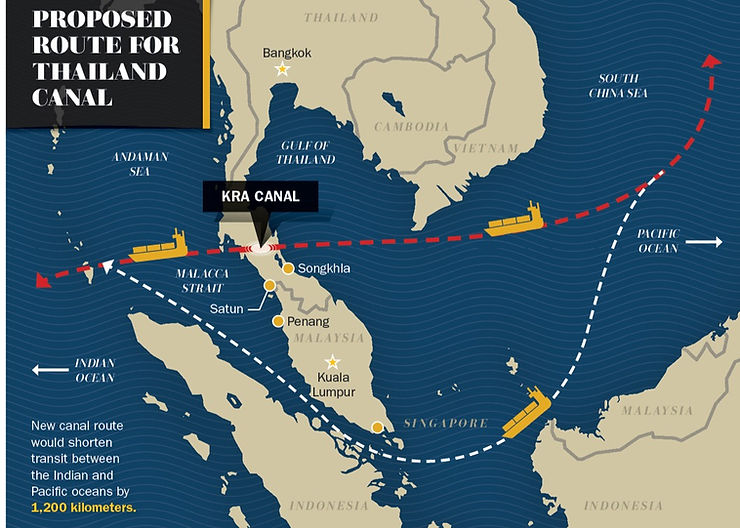
Figure 3: Proposed alternative routes to the Strait of Malacca, reflecting the intense interest of multiple powers in reducing chokepoint dependency. (Source: StraitMalacca.com)
Who Controls What: A Comparative Summary
The strait’s “control” is not a binary. It operates on multiple overlapping layers — legal, operational, strategic, and economic — with different actors dominant in each dimension. The following table maps these layers clearly.
| Actor | Type of Control / Influence | Basis | Status |
|---|---|---|---|
| 🇲🇾 Malaysia | Territorial sovereignty (northern shore); port governance; traffic management; coastguard patrols | UNCLOS territorial sea; domestic law | Formal |
| 🇸🇬 Singapore | Sovereignty over Phillips Channel approaches; port operations; navigational services; traffic separation scheme co-management | UNCLOS; bilateral agreements; IMO designation | Formal |
| 🇮🇩 Indonesia | Territorial sovereignty (Sumatra coastline and southern waters); control of alternative straits (Lombok, Sunda) | UNCLOS; archipelagic state rights | Formal |
| 🇺🇸 United States | Naval dominance of broader Indo-Pacific; forward presence at Singapore; freedom of navigation enforcement; alliance architecture | 7th Fleet; bilateral basing agreements; superpower status | Strategic |
| 🇨🇳 China | Growing PLAN presence; BRI port investments along shipping route; South China Sea claims approaching strait’s northeastern exit | Naval expansion; economic investment; political pressure | Contested / Aspiring |
| 🇮🇳 India | Geographic command of northern entrance via Andaman & Nicobar Islands; Quad membership; anti-piracy contributions | Geographic position; Andaman & Nicobar Command; JMSDF cooperation | Strategic |
| 🇯🇵 Japan | Anti-piracy operations; ReCAAP founding member; JMSDF capacity; diplomatic support for freedom of navigation | Existential energy dependency; bilateral security alliance with U.S. | Stakeholder / Observer |
| IMO / UNCLOS | Legal framework; traffic separation scheme approval; environmental regulations; transit passage rules | International maritime law | Formal |
A History of Control: From Srivijaya to the 21st Century
The contest for control of the Strait of Malacca is not new — it has been the central drama of Southeast Asian geopolitics for over a thousand years. Understanding that history illuminates the present.
Multilateral Cooperation Frameworks
Despite — or because of — its contested geopolitical character, the Strait of Malacca is governed by a surprisingly robust set of cooperative multilateral frameworks that have meaningfully reduced piracy, improved navigational safety, and provided a degree of institutional stability.
ReCAAP — Regional Cooperation Agreement on Combating Piracy
Established in 2006 and headquartered in Singapore, ReCAAP is the first regional inter-governmental agreement focused on anti-piracy in Asian waters. It has 21 contracting parties and operates an Information Sharing Centre (ISC) that collects, analyses, and disseminates piracy incident data in near real time. The agreement is widely credited with dramatically reducing piracy incidents in the Malacca Strait from over 150 incidents per year in the early 2000s to a fraction of that today.
Malacca Strait Patrol (MSP)
A trilateral security arrangement among Malaysia, Singapore, and Indonesia launched in 2004, the Malacca Strait Patrol coordinates naval and coastguard patrols by the three littoral states, with Thailand participating as an observer. It operates three components: coordinated sea patrols, an Eyes in the Sky air patrol initiative, and an intelligence-sharing mechanism.
IMO Traffic Separation Scheme
The International Maritime Organization (IMO) formally recognises the Traffic Separation Scheme established by the three littoral states, dividing the strait into northbound and southbound lanes and mandating reporting requirements for vessels. Singapore’s Vessel Traffic Information System (VTIS) provides real-time tracking and guidance to vessels transiting the eastern approaches.
The Future of Control: Contested or Cooperative?
The question of who will control the Strait of Malacca in the coming decades is inseparable from the broader question of whether the 21st century’s great-power competition produces conflict or accommodation in the Indo-Pacific.
The Scenario of Continued U.S. Dominance
If the United States retains its current naval superiority and its alliance architecture in the Indo-Pacific remains intact, the strait is likely to remain governed under the existing UNCLOS framework, with the three littoral states exercising formal sovereignty and the U.S. providing the strategic backstop. Freedom of navigation would be preserved, and commercial interests across all nations would be served.
The Scenario of Chinese Assertion
A more assertive China — one that has narrowed the naval gap with the United States, cemented its South China Sea claims, and developed BRI port relationships into genuine military-access arrangements — could plausibly seek to exercise greater coercive influence over the strait, even without claiming sovereignty. This is the scenario most feared by Japan, South Korea, Taiwan, and the ASEAN states, and it is the primary driver of military modernisation across the region.
Proposed Bypasses That Could Redistribute Power
The construction of either the Kra Canal or the Thailand Land Bridge would significantly alter the geopolitics of strait control by creating an alternative corridor that bypasses the territorial waters of Malaysia, Singapore, and Indonesia entirely — and potentially reduces the U.S. chokepoint leverage at Singapore. Read more about the Kra Canal proposal. For an analysis of the land-bridge alternative, see our dedicated piece on the Thailand Land Bridge project.
Further Reading on StraitMalacca.com
Conclusion: Control Is Layered, Contested, and Consequential
The question “who controls the Strait of Malacca?” has no simple single-word answer — and that complexity is itself the most important insight. The strait is governed simultaneously on multiple levels: formal territorial sovereignty by Malaysia, Singapore, and Indonesia; strategic naval dominance by the United States; growing coercive ambition from China; rising geographic leverage by India; and an international legal framework under UNCLOS that constrains what any of them can actually do.
What makes the strait unique is that this multi-layered, contested control has nonetheless produced a remarkably stable and functional maritime corridor for decades — one that carries trillions of dollars of trade per year with a safety and reliability record that belies its geopolitical fragility. That stability is not natural or automatic. It is the product of careful diplomacy, multilateral cooperation, deterrence, and shared economic interests among nations that are simultaneously rivals and trading partners.
The greatest risk to the strait is not that one power seizes control — UNCLOS and mutual deterrence make that unlikely. The greater risk is that the cooperative frameworks holding the current system together erode under the weight of great-power competition, leaving a void that no single actor can fill and that the global economy cannot afford to lose.